
Emergency Stops and Machine Guarding: What’s the Difference?
Navigate Article
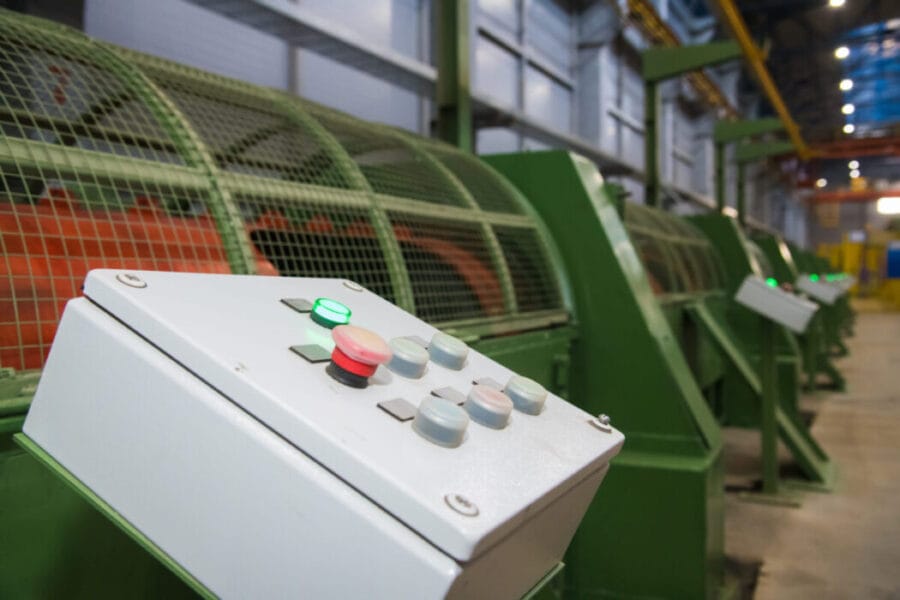
The difference between emergency stops and machine guarding is simple: machine guarding is intended to prevent or adequately restrict access to a hazard, while an emergency stop is intended to initiate a stop response when a dangerous situation occurs or is developing.
An emergency stop does not physically separate a person from dangerous moving parts. It is a complementary protective measure, not a substitute for guards, interlocked access or other safeguarding methods.
This distinction matters because emergency stop devices are often visible and easy to understand, while guarding problems are less obvious. On many industrial sites, people assume that if a machine has emergency stop buttons, it is adequately protected. In practice, that assumption can create serious exposure.
What Machine Guarding Does
Machine guarding is used to prevent or adequately restrict access to hazardous parts of machinery during normal operation and foreseeable intervention.
Depending on the application, guarding may include:
- fixed guards
- interlocked movable guards
- perimeter fencing
- tunnel guards
- covers around drives, couplings and rotating parts
- access gates with interlocking
- other physical barriers integrated with the machine safety design
The purpose of guarding is to control exposure before contact occurs. A properly designed guard prevents people from reaching hazardous movement, getting caught in nip points, contacting rotating components or entering dangerous zones without the required safety response.
In many cases, the guard is the primary physical protective measure.
What an Emergency Stop Does
An emergency stop device allows a person to initiate an emergency stop function when a dangerous situation occurs or is developing.
Common examples include:
- mushroom-head emergency stop pushbuttons
- rope pull or pull-wire emergency stop devices along conveyors
- emergency stop bars or cables on some equipment
- emergency stop stations at access points or operator positions
The purpose of an emergency stop is to initiate a stop response that averts or reduces danger as quickly as the machine design allows.
An emergency stop is reactive. It depends on someone identifying the problem and actuating the device in time. It also depends on the machine stopping quickly enough to reduce the risk.
For that reason, emergency stops should not be treated as the first or only line of defense against accessible machine hazards.
Why Emergency Stops Do Not Replace Machine Guarding
This is the most important point: an emergency stop does not prevent a person from reaching the hazard.
If a rotating shaft, conveyor nip point, belt drive, press area or robotic cell is physically accessible, adding an emergency stop button does not make that exposure acceptable. The person may already be caught, pulled in or inside the danger zone before the device is actuated or before the machinery stops.
Emergency stops also have practical limitations:
- they rely on human recognition and reaction
- they may not be within reach from the exposure point
- hazardous motion may continue during stopping time
- they do not control access during cleaning, setup or maintenance
- they do not prevent unexpected restart unless the broader safety design addresses it
- they may not remove all forms of stored energy
That is why emergency stop devices are generally treated as complementary measures rather than primary safeguarding.
Where Machine Guarding Is Usually Required
Machine guarding is typically needed wherever people could otherwise access hazardous machine parts or zones during operation or foreseeable tasks.
Common examples include:
- rotating shafts, pulleys, chains and couplings
- in-running nip points on conveyors
- robot operating envelopes
- cutting, shearing or crushing zones
- automated machinery with restricted access areas
- points where product, tools or body parts could enter a hazardous area
The exact safeguarding method depends on the machine, hazard type, frequency of access, stopping characteristics and operating requirements. In many facilities, these measures are implemented using modular machine guarding systems that combine fixed panels, interlocked access points and perimeter barriers around hazardous areas. Even in a modular layout, the guarding function remains different from the emergency stop function.
Where access is infrequent, a fixed guard may be suitable. Where regular access is needed, interlocked guards, guarded access doors or another engineered safeguarding approach may be more appropriate.
Where Emergency Stops Are Important
Emergency stop devices are still a critical part of many machine safety systems. They provide a way for operators, maintainers or bystanders to initiate a stop when something goes wrong.
They are commonly used:
- at operator stations
- along accessible conveyor runs
- near loading and unloading positions
- at access points to larger machines or cells
- on equipment where rapid manual intervention may reduce harm
However, their role should be understood clearly. An emergency stop helps respond to danger. It does not, by itself, make access to dangerous parts safe.
Common Mistakes in Emergency Stop and Guarding Design
Using emergency stops instead of physical guards
This is one of the most common errors. Emergency stop buttons are sometimes added where a hazard should have been physically enclosed or access-controlled.
Assuming emergency stops make maintenance access safe
Pressing an emergency stop is not the same as isolating the machine. Cleaning, adjustment and maintenance tasks may still require full isolation and control of stored energy.
Placing emergency stops where they are hard to reach
An emergency stop is only useful if it can be reached quickly when needed. Poor location reduces practical effectiveness.
Ignoring stopping time
A device may function correctly, but if the machine takes too long to stop, the emergency stop may not prevent injury once exposure begins.
Failing to integrate guards and controls properly
Interlocked guards, emergency stops, reset functions and restart prevention should all be considered together. Treating them as separate add-ons often creates unsafe gaps.
Implementation Considerations
When reviewing emergency stops and machine guarding, assess:
- what hazards need to be prevented by physical separation
- where a person could access moving parts
- whether access is needed during normal operation, cleaning or maintenance
- where emergency stop devices are needed for practical reach
- stopping time and hazard run-down
- how restart is controlled after a stop
- what isolation procedures apply for intervention tasks
The best machine safety arrangements use emergency stops and guarding for different purposes within the same overall system. One does not replace the other.
Relevant Standards and Technical Considerations
Common international standards relevant to this topic include:
- ISO 12100 for risk assessment and risk reduction
- ISO 14120 for the design and selection of guards
- ISO 14119 for interlocking devices associated with guards
- ISO 13850 for emergency stop function
- ISO 13857 for safety distances
- ISO 14118 for prevention of unexpected start-up
- ISO 13849-1 for safety-related parts of control systems
Local regulations and industry-specific machinery requirements should also be reviewed for the installation location.
Conclusion
The difference between emergency stops and machine guarding is that guarding is used to prevent or adequately restrict access to hazards, while an emergency stop is used to initiate a stop in response to danger.
Both are important, but they do different jobs. Emergency stop devices are valuable complementary measures, but they do not replace fixed guards, interlocked access or proper machine safety design.
If you are reviewing an existing machine or planning a guarding upgrade, the key question is not whether an emergency stop is present. It is whether the hazard is actually being controlled before exposure occurs.
Frequently Asked Questions
Is an emergency stop the same as a machine guard?
No. A machine guard is intended to prevent or restrict access to a hazard. An emergency stop is intended to stop the machine or hazardous function in an emergency.
Can an emergency stop replace machine guarding?
No. An emergency stop is a complementary protective measure and does not physically prevent access to dangerous parts.
Do all machines need an emergency stop?
Not every machine will require the same emergency stop arrangement. The need, type and location should be determined by the machine design, risk assessment and applicable requirements.
Does pressing an emergency stop isolate the machine?
No. An emergency stop is not the same as energy isolation. Maintenance or intervention tasks may still require formal shutdown and isolation procedures.
Are emergency stops enough for conveyors?
No. Conveyors typically also require guarding around accessible hazard points such as pulleys, rollers, drives and transfer points.
What is the purpose of an interlocked guard?
An interlocked guard helps control access to a hazard by linking guard position to the machine safety function, such as stopping hazardous movement or preventing operation while the guard is open.
Why does stopping time matter for emergency stops and guards?
If hazardous movement continues after a stop command, a person may still be injured before the machine reaches a safe state. Stopping time affects both emergency stop effectiveness and interlocked access design.
Request A Quote
Need Guarding for a Machine or Production Line?
- Free, no obligation quote
- Send drawings or a basic layout
- Get a recommended configuration
- 24-48 hours turnaround on quotes