
Risk Assessment for Mechanical Power-Transmission Hazards
Navigate Article
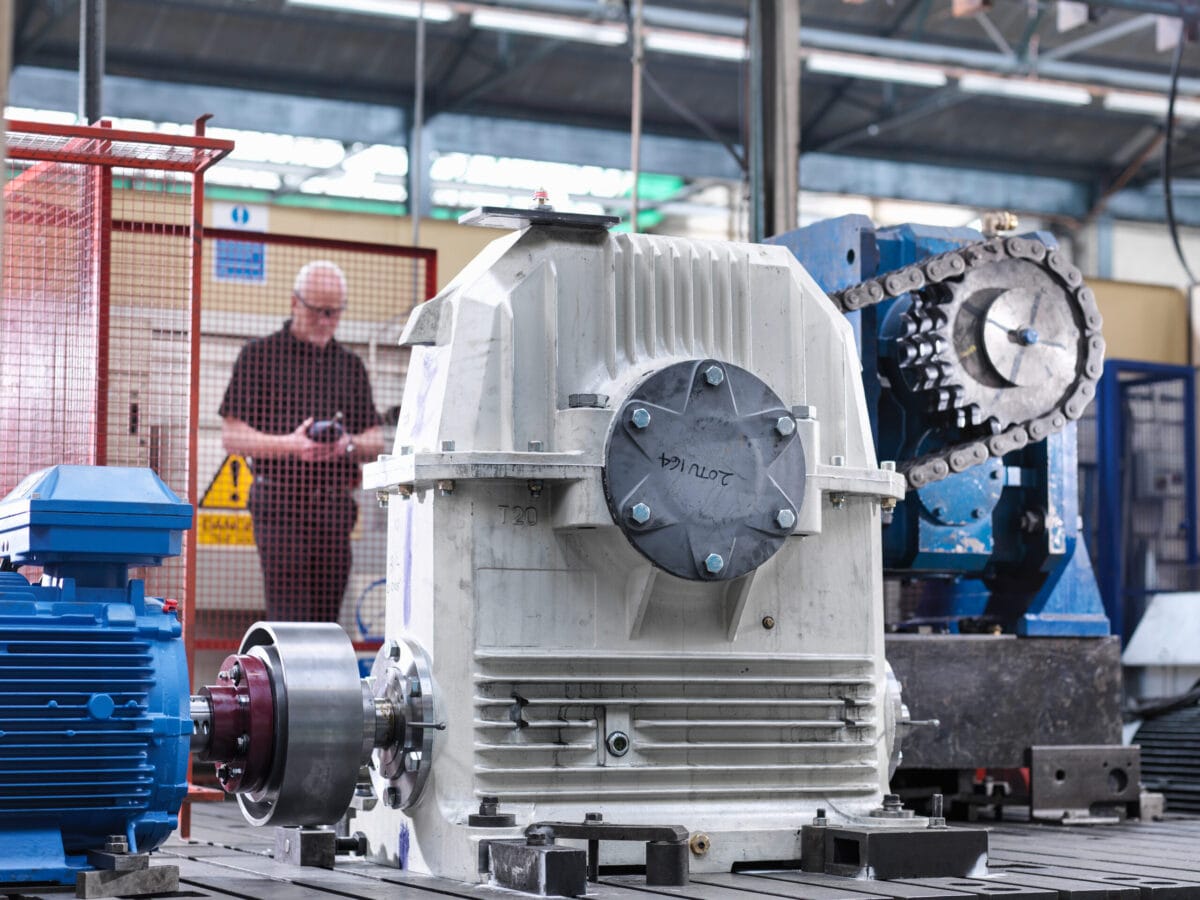
Mechanical power-transmission hazards are common on conveyors, pumps, fans, mixers, machine tools, packaging equipment and older production machinery. Shafts, belts, pulleys, chains, sprockets, couplings, flywheels and gears can catch clothing, gloves, hair, tools or body parts with little opportunity to escape.
A risk assessment should identify every accessible transmission component, how people may approach it and whether the existing guard prevents contact during normal operation, cleaning, adjustment and maintenance.
The key question is not simply whether a drive has a cover. It is whether people can reach the hazardous component through, under, around or over the guard, or gain access when the machine is stopped but not properly isolated.
What Are Mechanical Power-Transmission Hazards?
Mechanical power-transmission apparatus transfers power from a motor, gearbox or other source to the machine function.
Common examples include:
- rotating shafts and projecting shaft ends
- couplings, collars, keys and set screws
- belts and pulleys
- chains and sprockets
- gears and gear trains
- flywheels
- friction drives
- crank mechanisms and connecting rods
- conveyor drive assemblies
- motor and gearbox connections
These components can create entanglement, drawing-in, crushing, shearing and impact hazards. Even low-speed rotating equipment can be dangerous where clothing, gloves or cleaning materials may be caught and pulled into the machinery.
Start With the Complete Drive System
Pay particular attention to exposed set screws, keys, bolts and other protrusions on rotating shafting. These features can increase entanglement risk and should not remain accessible during normal operation.
Do not assess only the most visible component. A motor may be guarded while the coupling, belt drive, return-side nip point or projecting shaft remains exposed.
Review:
- the power source and motor
- gearboxes and couplings
- shafts, collars and protruding fasteners
- belt and pulley arrangements
- chain drives and sprockets
- flywheels and rotating discs
- accessible gear mesh points
- drives beneath, behind or above the machine
- associated conveyors and material-handling equipment
- lubrication, inspection and adjustment points
The assessment should identify the actual danger zone. For example, a belt guard may cover the front of a drive but leave access to the in-running nip point from the side or beneath the machine frame.
Identify Who May Be Exposed
Mechanical transmission hazards often affect more than the machine operator.
Consider exposure to:
- production operators
- maintenance personnel
- cleaners
- lubrication technicians
- contractors
- electricians
- supervisors and inspectors
- workers passing nearby
- forklift or pallet-jack operators near exposed drives
Then consider when access occurs:
- during normal operation
- during inspection
- while lubricating components
- during belt tensioning or tracking
- while clearing material buildup
- during fault-finding
- during cleaning
- during planned maintenance
- after a guard has been removed for repair
A guard arrangement that is acceptable for an isolated drive may become unsuitable where staff need repeated access for routine servicing.
Assess Access Paths to the Hazard
The guarding review should assess every realistic route to the transmission component.
Check for:
- access through mesh openings
- gaps below local guards
- spaces between the guard and machine frame
- gaps at panel joints or corners
- exposed shaft ends beyond the main guard
- access around the ends of belt or chain covers
- removable panels not correctly refitted
- openings around conveyor frames, services or chutes
- nearby platforms, pallets or structures that create reach-over access
The opening size and the distance from the guard to the hazard must be assessed together. A mesh guard installed too close to a belt, pulley or sprocket may still allow fingers or hands to reach an in-running nip point.
The assessment should also consider foreseeable attempts to access the component quickly. If a worker routinely reaches around a cover to clear debris or check a belt, the guarding and maintenance arrangement needs review.
Review Guard Type and Condition
Fixed guards are often a strong option for power-transmission hazards because access is usually not required while the machine is operating.
A suitable guard should:
- prevent or adequately restrict access to the hazardous component
- remain secure during normal operation
- resist foreseeable vibration and displacement
- avoid sharp edges, trapping points or other new hazards
- account for guard deflection where safety distance depends on separation
- require the intended tools for removal where maintenance access is needed and should not allow easy or unintended removal
- be practical to remove and refit correctly during planned servicing
Close-fitting local guards are often appropriate for shafts, couplings, belt drives, chains and sprockets. Modular perimeter guarding may be useful around larger automated systems or multiple drives, but it does not replace local guards where the transmission components remain accessible inside the enclosure.
Consider Maintenance, Lubrication and Cleaning
Many power-transmission incidents occur when guards are removed for maintenance, belt adjustment, lubrication or cleaning.
The risk assessment should determine:
- whether the task can be completed with the machine stopped
- whether full isolation is required before access
- how stored energy, flywheel run-down and belt tension are controlled
- whether lubrication points can be relocated or accessed externally
- whether guard removal is necessary for routine work
- how the guard will be supported, removed and refitted
- whether maintenance staff have the intended fasteners and replacement parts
- whether the task requires a different access arrangement, such as a properly designed interlocked movable guard, externally accessible lubrication points or a change to the machine design
An emergency stop is not energy isolation. Before maintenance or cleaning exposes a person to rotating components or stored energy, the machine should be shut down and isolated in accordance with the site procedure and applicable requirements.
Assess Flywheel and Run-Down Risk
Flywheels, large pulleys and rotating assemblies can continue moving after drive power is removed. This creates a run-down hazard during maintenance, inspection or access.
Consider:
- how long the component takes to stop
- whether the rotating part remains accessible during run-down
- whether stored mechanical energy is present
- whether a person could remove a cover before the motion has ceased
- whether guard locking, increased separation or another measure is needed
- how maintenance personnel verify that the equipment has reached a safe state
Where a movable guard is used and a person could reach the danger zone before the machine-related risk has ceased, guard locking, increased separation distance or another suitable protective measure may be required. The decision should consider the relationship between stopping time and access time. The decision should consider the relationship between stopping time and access time.
Inspect for Damage, Corrosion and Guard Defeat
Mechanical guards can degrade over time due to vibration, impact, washdown, corrosion and repeated removal.
Inspect for:
- bent or cracked panels
- loose brackets and fasteners
- corrosion around posts, fixings and hinges
- enlarged gaps caused by guard movement
- missing covers after maintenance
- damaged mesh or sheet metal
- oil, dust or product buildup affecting guard fit
- signs of bypassing or improvised repairs
- exposed set screws, keys, bolts or protruding shaft features
A guard that remains present but can be moved aside, opened without the intended tools or bypassed easily may no longer provide the required protective function.
Relevant Standards and Technical Considerations
Mechanical power-transmission risk assessment should consider the machine, operating tasks and applicable local requirements.
Common international standards may include:
- ISO 12100 for machinery risk assessment and risk reduction
- ISO 14120 for the design and construction of fixed and movable guards
- ISO 13857 for safety distances to prevent access to hazard zones
- ISO 14119 for interlocking devices associated with guards
- ISO 14118 for prevention of unexpected start-up
- ISO 13849-1 for safety-related parts of control systems where safety functions are used
In Australia, the AS 4024 Safety of Machinery series addresses machinery safety topics including risk assessment, guarding, safety distances and safety-related control systems.
In the United States, OSHA 29 CFR 1910.219 addresses mechanical power-transmission apparatus, while other requirements such as OSHA 1910.212 and 1910.147 may also apply. Some U.S. states operate OSHA-approved state plans that may impose additional or different requirements. Local regulatory and industry-specific requirements should be reviewed for the installation location.
Common Risk Assessment Mistakes
Common mistakes include:
- assessing the main machine hazard but not the drive system
- assuming low-speed shafts do not require guarding
- measuring to the machine frame instead of the actual nip point
- leaving shaft ends, set screws or couplings exposed
- using mesh too close to belts, pulleys or chains
- removing guards for lubrication without reviewing the task
- relying on emergency stops instead of isolation
- failing to assess flywheel run-down
- treating modular perimeter fencing as a replacement for local drive guards
- refitting guards with unsuitable or hand-removable fasteners
Conclusion
Risk assessment for mechanical power-transmission hazards should cover the complete drive system, not only the main machine process. Shafts, couplings, belts, pulleys, chains, sprockets, gears and flywheels can all create serious entanglement and drawing-in risks when they remain accessible.
The most effective approach combines suitable local guarding, controlled maintenance access, energy isolation and regular inspection. Where larger automated areas are involved, modular perimeter guarding can support whole-body access control, but it does not replace close-fitting guards around accessible transmission components.
If you are reviewing a conveyor drive, motor coupling, belt system or older machine with exposed rotating parts, identify the actual hazards, access tasks and maintenance requirements before selecting or modifying guarding.
Frequently Asked Questions
What are mechanical power-transmission hazards?
They are hazards created by components that transmit power within machinery, including shafts, couplings, belts, pulleys, chains, sprockets, gears, flywheels and related rotating parts.
Do slow-moving shafts need guarding?
Potentially, yes. The need depends on accessibility and risk, but low rotational speed does not remove entanglement hazards. A slow shaft can still catch clothing, gloves, hair or cleaning materials.
Can mesh be used to guard belts and pulleys?
Sometimes. Mesh must be strong, securely fixed and positioned so people cannot reach the belt, pulley or in-running nip point through the openings.
Are fixed guards suitable for power-transmission components?
Often, yes. Fixed guards are commonly used where access is infrequent because they provide a physical barrier without relying on routine opening or operator action.
Does an emergency stop replace guarding around a drive system?
No. Emergency stops are complementary protective measures. They do not physically prevent contact with shafts, belts, pulleys, chains or other hazardous transmission components.
What should be checked before removing a transmission guard?
Check whether the machine has been shut down and isolated, whether flywheels or rotating parts have stopped, whether stored energy has been controlled and how the guard will be properly refitted before restart.
Can modular perimeter guarding replace local drive guards?
No. Modular perimeter guarding can control whole-body access to a larger machine area, but local guards may still be required around accessible shafts, couplings, belts, pulleys, chains and gears.
Request A Quote
Need Guarding for a Machine or Production Line?
- Free, no obligation quote
- Send drawings or a basic layout
- Get a recommended configuration
- 24-48 hours turnaround on quotes