
Material Selection for Washdown and Corrosive Machine Guarding
Navigate Article
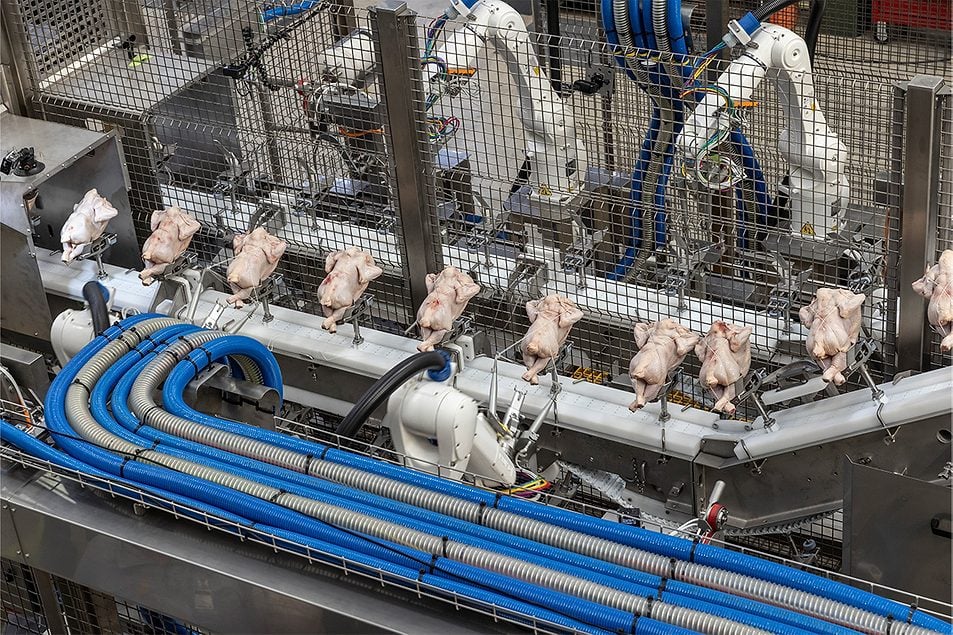
Machine guarding in washdown, food-processing and corrosive environments must do more than prevent access to hazardous movement. It also needs to resist corrosion, support effective cleaning and avoid creating areas where water, product residue, blood, fat, dust or chemicals can collect.
The right material selection depends on the process, cleaning method, chemical exposure, temperature, moisture, contamination risk and required guard function. A standard painted steel mesh panel may be suitable in a dry manufacturing area but unsuitable in a meat-processing room, chemical plant or fertilizer-handling facility.
For hygienic applications, the goal is not simply to use stainless steel. The guarding layout, mesh type, panel construction, fixings, drainage and access arrangement must all support cleaning and inspection.
Why Environment Matters in Machine Guarding Design
Machine guards are often exposed to conditions that affect their life, cleanability and safety performance.
Common environmental exposures include:
- frequent washdown
- high-pressure water cleaning
- foam cleaning and sanitizing chemicals
- blood, fat, protein or food-product residue
- salt, chlorine compounds or acids
- fertilizer dust and chemical residues
- humidity and condensation
- outdoor weather exposure
- abrasive dust or airborne contaminants
- temperature cycling
- forklift or pallet impact
If guarding materials or construction details are not suitable, corrosion can weaken posts, panels, brackets and fixings. Surface damage can also create rough areas that hold contaminants or make cleaning more difficult.
In food and meat processing, accumulated material inside mesh, around brackets or behind panels can create hygiene concerns. Guards should be designed so they can be cleaned effectively and inspected without unnecessary dismantling.
Start With the Process and Cleaning Method
Material selection should begin with an understanding of the actual operating environment.
Ask:
- What products are processed near the guard?
- Is the area dry, damp or subject to regular washdown?
- Are high-pressure washers used?
- Which cleaning chemicals, sanitizers or degreasers are used?
- Is there exposure to blood, fat, protein, salt or other food residue?
- Does the process create dust, fertilizer residue, chemical vapors or corrosive deposits?
- Are there temperature extremes or regular thermal cycling?
- Can liquids drain away from the guarding?
- How often will the guard need to be cleaned or removed for inspection?
A material that performs well against water may still be unsuitable for aggressive cleaning chemicals, salt exposure or chemical dust. Compatibility should be checked against the actual process and cleaning regime.
Stainless Steel for Hygienic and Washdown Areas
Stainless steel is commonly used for machine guarding in washdown and hygienic environments because it can provide good corrosion resistance and a cleanable surface when the correct grade, finish and construction are selected.
However, stainless steel is not one material with one level of corrosion resistance.
Common considerations include:
- 304 stainless steel, often used in general food-processing and indoor washdown environments
- 316 stainless steel, often considered where salt exposure, chloride-containing residues or more demanding corrosion conditions are present
- surface finish and weld quality
- crevices around brackets, fasteners and panel joints
- contact between dissimilar metals
- damage from cleaning tools, impact or abrasive contamination
The appropriate grade should be selected for the actual environment. A food-processing area using salt-based products, chlorine-containing cleaners or frequent aggressive washdown may require a different approach from a dry packaging room. Stainless steel grade should be checked against the actual chemical concentration, temperature, cleaning frequency, residue dwell time and drainage conditions, because 316 is not immune to chloride-related corrosion.
Do not specify stainless steel by appearance alone. Material grade, chemical compatibility and fabrication details all matter. Stainless steel can still stain, pit or corrode where residues are allowed to remain, drainage is poor, cleaning chemistry is unsuitable or dissimilar-metal contact is not managed.ry is unsuitable or dissimilar-metal contact is not managed.
Mesh Selection in Meat and Food Processing Plants
Mesh panels are useful where visibility and airflow are required, but mesh can create cleaning challenges in high-hygiene environments.
In meat-processing plants, blood, fat, protein residue and product particles can collect around wire intersections, panel frames, brackets and fixings. If these areas cannot be cleaned and inspected effectively, retained residue can increase hygiene risk and may support microbial growth.
When selecting mesh guarding for food or meat processing, consider:
- aperture size and the likelihood of product buildup
- wire profile and surface finish
- welded joints and frame construction
- whether the panel can be cleaned from both sides
- drainage after washdown
- accessibility for inspection
- whether solid panels, clear panels or alternative guard construction would be easier to clean in high-contamination areas
Mesh should not be selected automatically simply because it is a common guarding option. In high-hygiene areas, the cleanability of the mesh profile, panel frame, joints and surrounding interfaces should be assessed against the contamination risk and cleaning method.
Avoid Crevices, Unnecessary Holes and Product Traps
Hygienic machine guarding should minimize areas where contaminants can collect.
Common problem areas include:
- unused mounting holes
- open tube ends
- overlapping sheet-metal sections
- deep panel frames
- brackets with inaccessible rear faces
- exposed threads
- gaps beneath panels
- poorly sealed penetrations for cables or services
- horizontal surfaces that retain water or residue
- corners that cannot be reached during cleaning
Where possible, avoid unnecessary holes, open-ended sections and complex bracket arrangements. Use suitable caps, seals or closed construction where this supports cleanability and does not interfere with the guard’s intended function.
The goal is not to eliminate every opening. Machine guards may need openings for fixings, drainage, visibility, safety distance or product flow. The design should instead avoid unnecessary openings and make required openings practical to clean and inspect.
Material Selection for Fertilizer and Corrosive Industrial Environments
Washdown is not the only concern. Fertilizer plants, chemical-processing facilities, mining operations and outdoor handling areas can expose guards to corrosive dust, chemical deposits, moisture and harsh weather.
Some fertilizer dusts and chemical residues can become highly corrosive when combined with humidity, condensation or washdown water. The material selection should therefore be based on the specific product handled, its concentration, dust accumulation, cleaning process and expected exposure time. Chemical residues may settle on mesh, posts, brackets and fasteners, causing corrosion in areas that are not inspected regularly.
For corrosive industrial environments, consider:
- the specific chemical or dust exposure
- concentration and frequency of contact
- humidity, condensation and drainage
- outdoor exposure and UV resistance where applicable
- corrosion resistance of panels, posts, brackets and fixings
- protective coating systems
- compatibility between different metals
- inspection access for areas where deposits can accumulate
- whether solid guarding is needed for containment or easier cleaning
Galvanized or coated steel may be suitable in some environments, but its suitability depends on the specific exposure and expected service conditions. In more aggressive environments, stainless steel, specialized coatings or other corrosion-resistant materials may be required.
Do Not Forget Fixings, Posts and Hardware
A corrosion-resistant panel can still fail if its posts, base plates, hinges, latches or fasteners are not suitable for the environment.
The complete guarding system should be assessed, including:
- panel material
- frame and post material
- welds and heat-affected areas
- brackets and joining hardware
- anchors and base plates
- hinges, latches and handles
- interlock mounting brackets
- cable glands, conduit and wiring protection
Mixing materials without considering compatibility can create corrosion issues. For example, moisture and chemical contamination can increase the risk of galvanic corrosion where dissimilar metals are used together.
In washdown areas, moving components such as hinges and latches also need to remain operable after repeated cleaning cycles. A gate that sticks, corrodes or no longer aligns can affect both usability and interlock performance.
Design for Drainage, Access and Maintenance
Material choice should work with the physical design of the guard.
A practical washdown or corrosive-environment guarding system should:
- avoid flat surfaces that hold liquid or residue
- allow water and cleaning solution to drain
- provide adequate clearance for cleaning equipment
- allow access to both sides of panels where required
- avoid inaccessible cavities and dead zones
- support inspection of posts, anchors and brackets
- use gate locations that allow planned cleaning and maintenance
- maintain safety distances and hazard coverage after cleaning or panel removal
Modular machine guarding can support replacement of damaged panels or reconfiguration of layouts. In hygienic environments, however, every added joint, bracket and interface should be reviewed for cleanability and corrosion resistance.
Common Material Selection Mistakes
Common mistakes include:
- selecting stainless steel without checking the grade or cleaning chemicals
- using mesh where solid guarding would be easier to clean
- specifying corrosion-resistant panels but standard fasteners
- leaving open tube ends or unnecessary holes
- creating horizontal ledges that retain water or product
- using incompatible metals in wet or chemical environments
- ignoring corrosion under brackets, base plates or panel joints
- selecting materials based only on initial cost
- treating hygiene as a cleaning issue rather than a design issue
A guard that cannot be cleaned effectively is unlikely to remain suitable in a high-hygiene environment.
Conclusion
Material selection for washdown and corrosive machine guarding should consider more than the panel surface. The complete system must resist the actual environment, support cleaning, avoid unnecessary contamination traps and continue to provide the required machine safeguarding function.
In meat and food processing, this means considering how blood, fat, protein residue, washdown water and cleaning chemicals interact with mesh, frames, brackets and fixings. In fertilizer, chemical and corrosive industrial environments, the focus may be chemical exposure, dust buildup, moisture, coating durability and corrosion resistance.
The best guarding solution is one that remains safe, cleanable and structurally sound throughout its service life. If you are specifying guarding for a washdown room, food-processing line or corrosive plant environment, provide the cleaning process, chemical information, site conditions and hazard details early so the material and layout can be selected properly.
Frequently Asked Questions
Is stainless steel always required for washdown machine guarding?
Not always. Stainless steel is commonly used in washdown areas, but the correct material depends on water exposure, cleaning chemicals, corrosion risk, hygiene requirements and the expected service conditions.
What stainless steel grade is suitable for food-processing machine guards?
304 stainless steel is commonly used in many indoor food-processing environments. 316 stainless steel may be more suitable where chloride exposure, salt, aggressive cleaners or higher corrosion risk is present. The grade should be confirmed against the actual process and cleaning chemicals.
Can mesh guarding be used in meat-processing plants?
Yes, but its cleanability must be assessed. Blood, fat, protein residue and other material can collect around mesh intersections, frames and brackets. In some high-hygiene areas, solid stainless panels or a combination of solid and mesh guarding may be more suitable.
Why should unnecessary holes be avoided in hygienic guarding?
Unused holes, open tube ends, overlapping sections and inaccessible brackets can trap water, product residue or cleaning chemicals. This can make cleaning and inspection more difficult and increase corrosion or hygiene risks.
Is powder-coated steel suitable for corrosive environments?
Sometimes. Suitability depends on the coating system, surface preparation, chemical exposure, impact risk, moisture and expected service conditions. In aggressive environments, a more corrosion-resistant material or specialized coating may be needed.
What should be considered for guarding in fertilizer plants?
Consider fertilizer type, dust accumulation, humidity, washdown, chemical residues, corrosion risk, drainage, material compatibility and the suitability of panels, posts, fixings and hardware.
Do stainless steel panels prevent corrosion completely?
No. Stainless steel can corrode or stain under certain conditions, particularly where chemical residues, chlorides, contamination, poor drainage or unsuitable cleaning methods are involved. Material grade and maintenance remain important.
Request A Quote
Need Guarding for a Machine or Production Line?
- Free, no obligation quote
- Send drawings or a basic layout
- Get a recommended configuration
- 24-48 hours turnaround on quotes